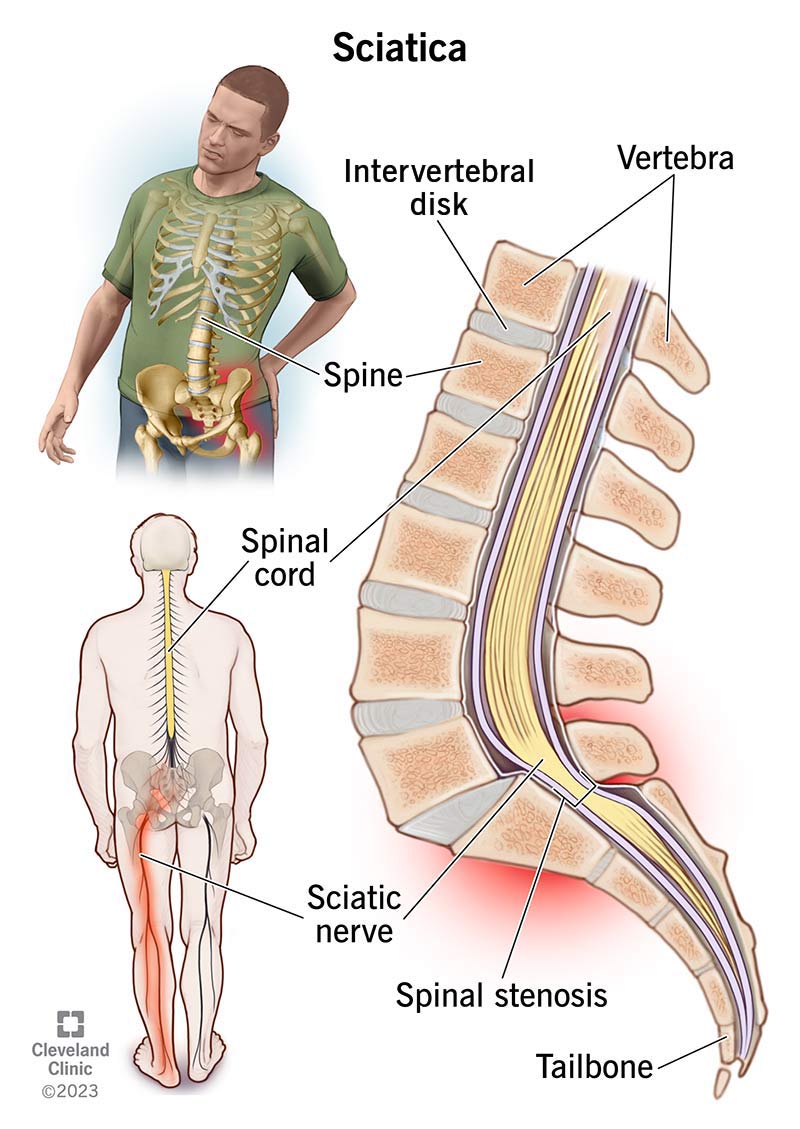
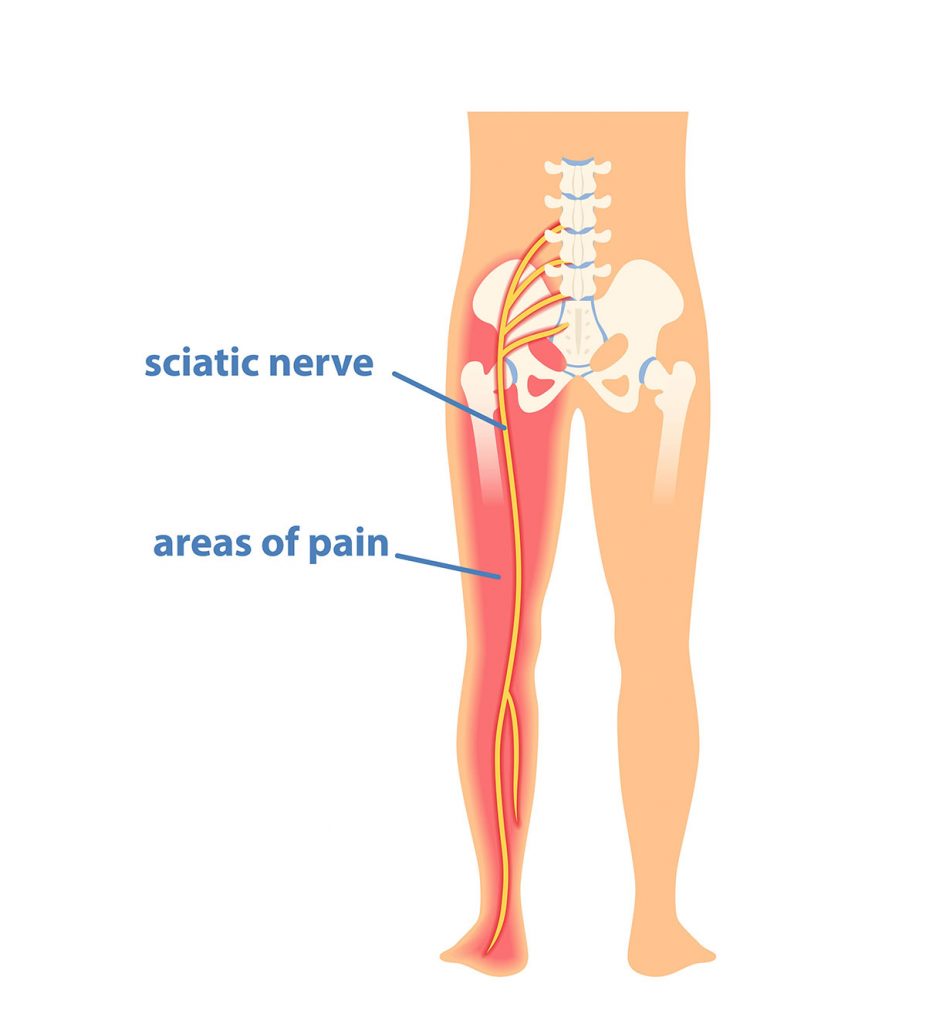
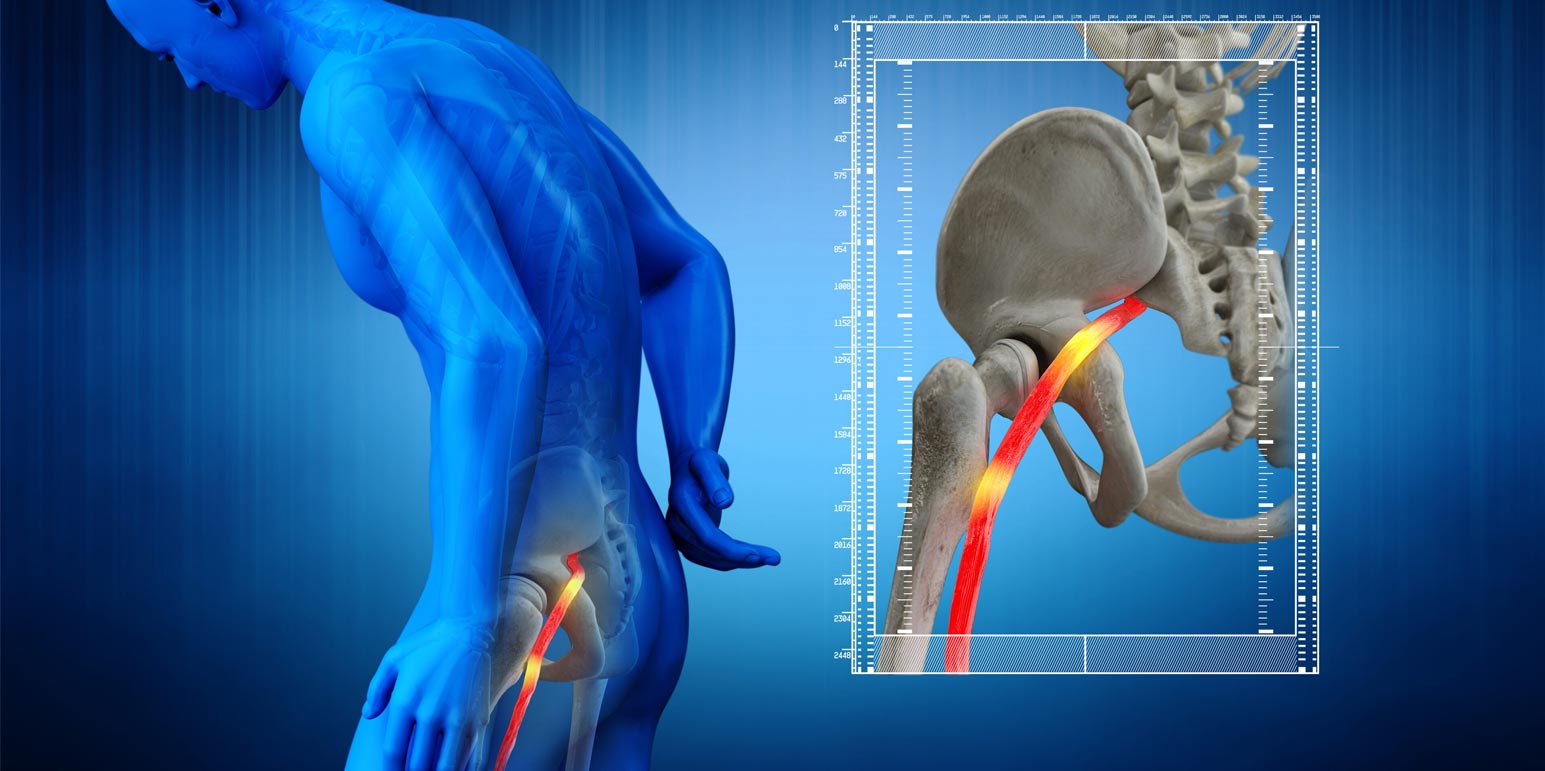
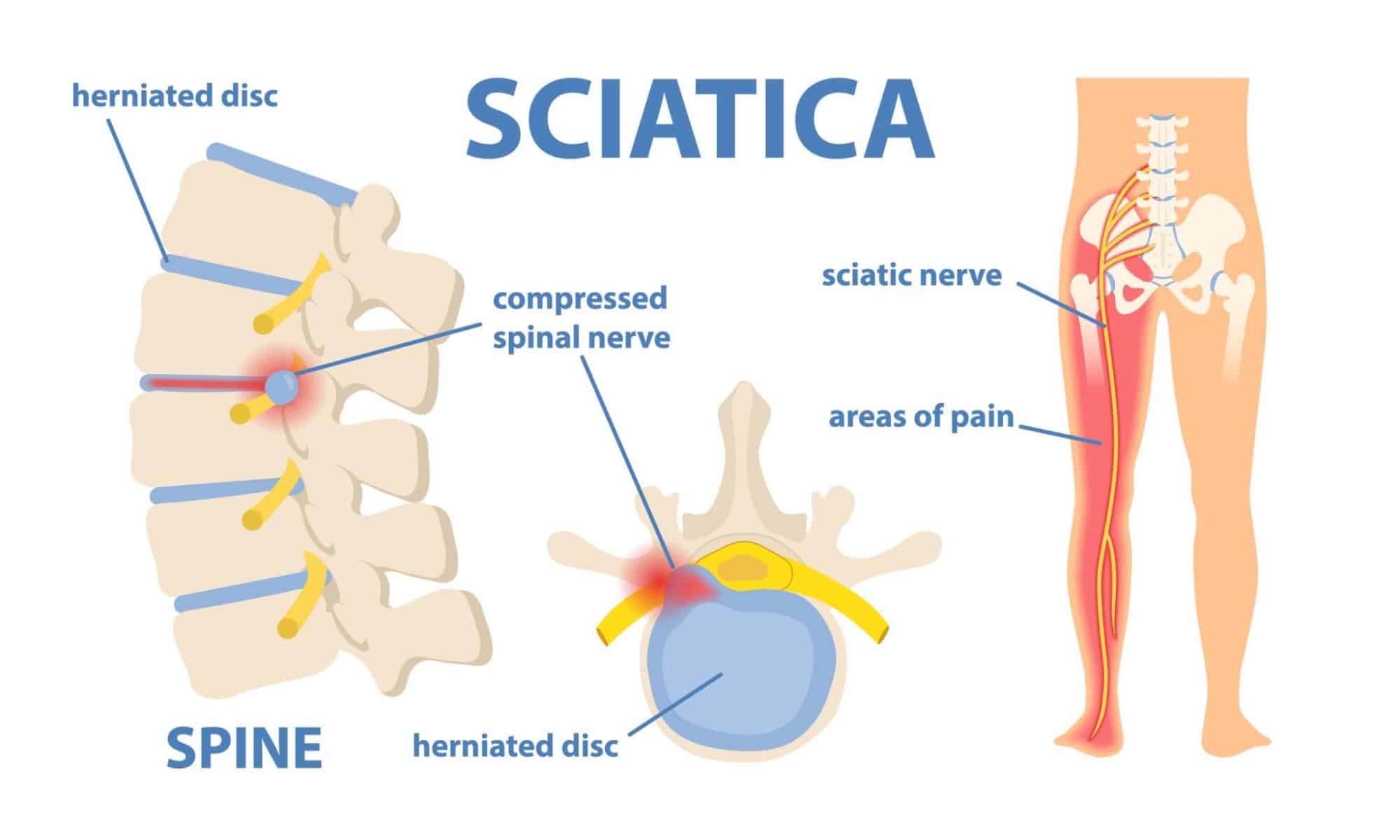
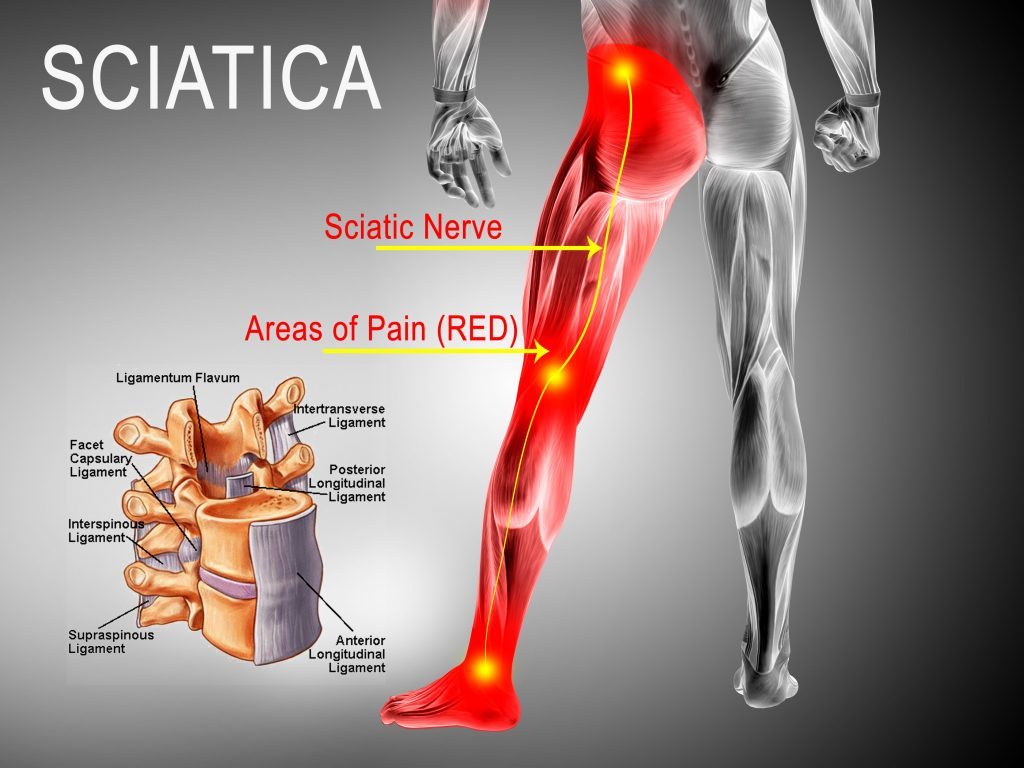
Sciatica refers to pain that radiates along the path of the sciatic nerve, the largest nerve in the human body. This nerve begins in the lower back, branches through the hips and buttocks, and extends down each leg. Sciatica is not a medical condition by itself, but rather a symptom of an underlying issue affecting the sciatic
Causes of Sciatica
Herniated disc: The most common cause, where a spinal disc bulges and presses on the nerve.
Bone spurs: Extra bone growth that irritates nearby nerves.
Spinal stenosis: Narrowing of the spinal canal, compressing the nerve roots.
Muscle spasm: Especially in the piriformis muscle, which can pinch the sciatic nerve.
Symptoms
Sharp, shooting pain starting in the lower back or buttock, traveling down the leg.
Numbness or tingling sensation in the leg or foot.
Weakness in the affected leg.
Pain that worsens when sitting, coughing, or sneezing.
Treatment Options
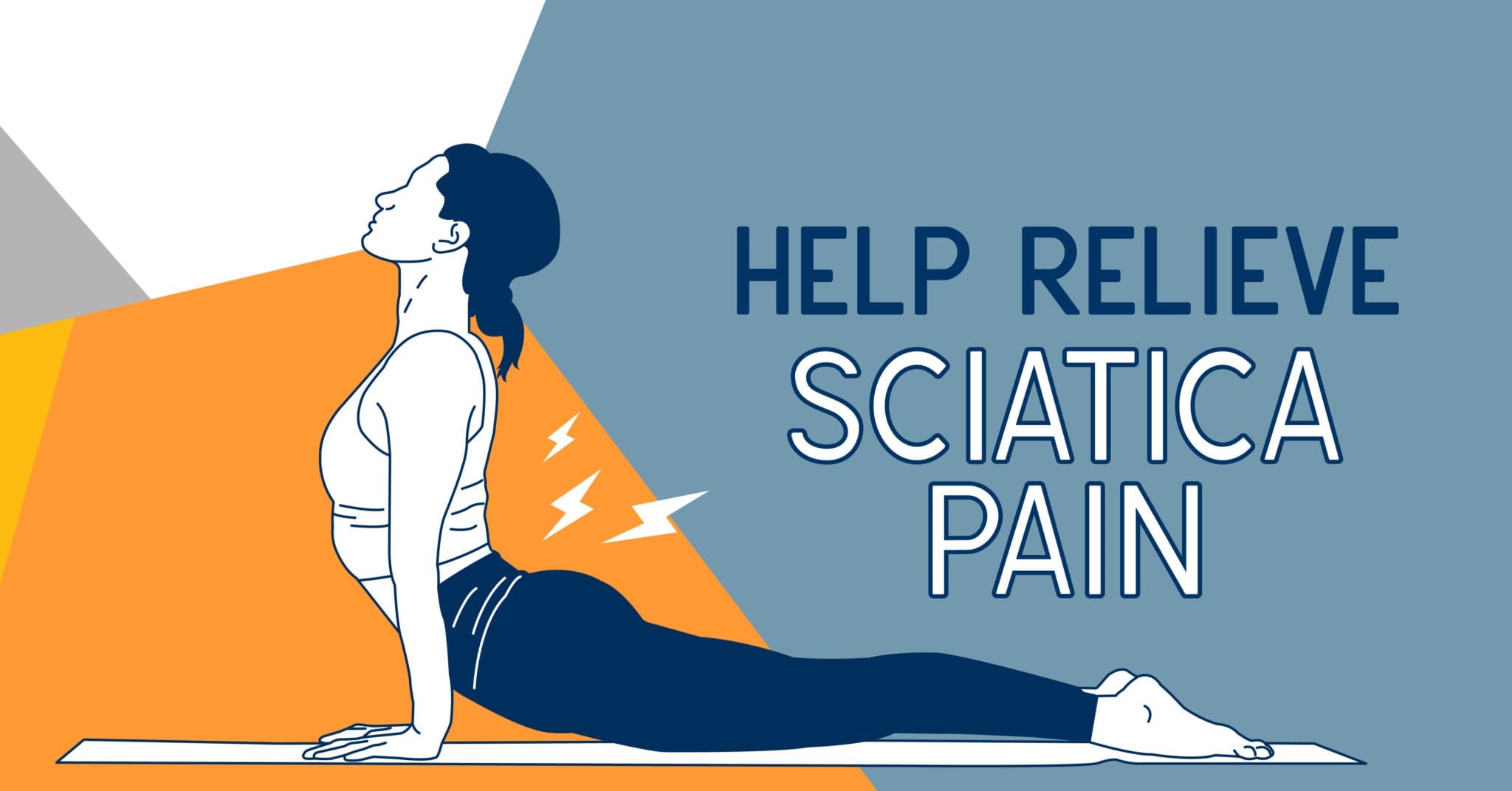
Physical therapy: Stretching and strengthening exercises to relieve pressure on the nerve.
Medications: Anti-inflammatory drugs, muscle relaxants, and nerve pain medications.
Lifestyle changes: Weight management, proper posture, and ergonomic adjustments.
Advanced options: Epidural steroid injections or, in severe cases, surgery.
Prevention
Maintaining strong core muscles, lifting objects correctly, and avoiding prolonged sitting can significantly reduce the risk of sciatica.