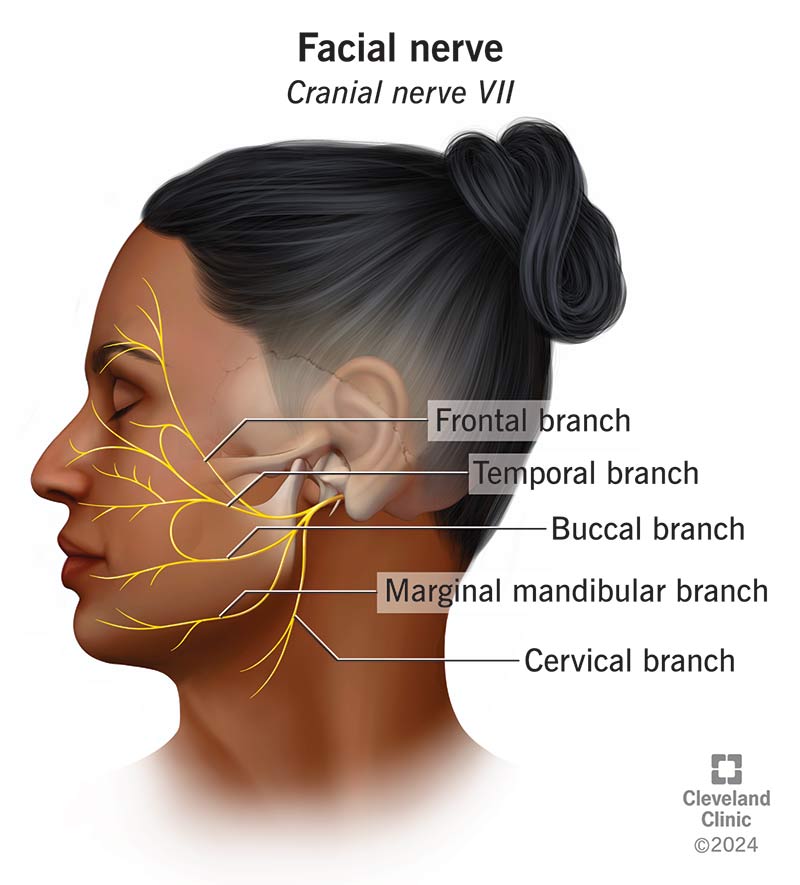
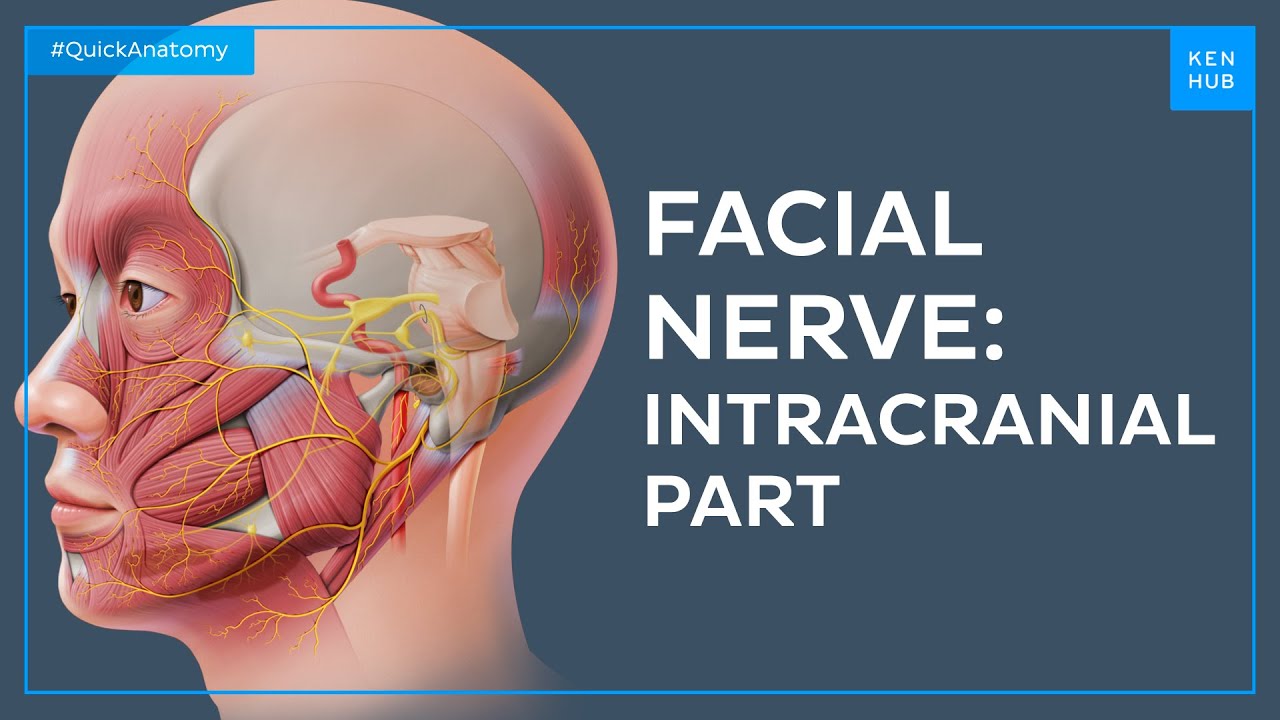
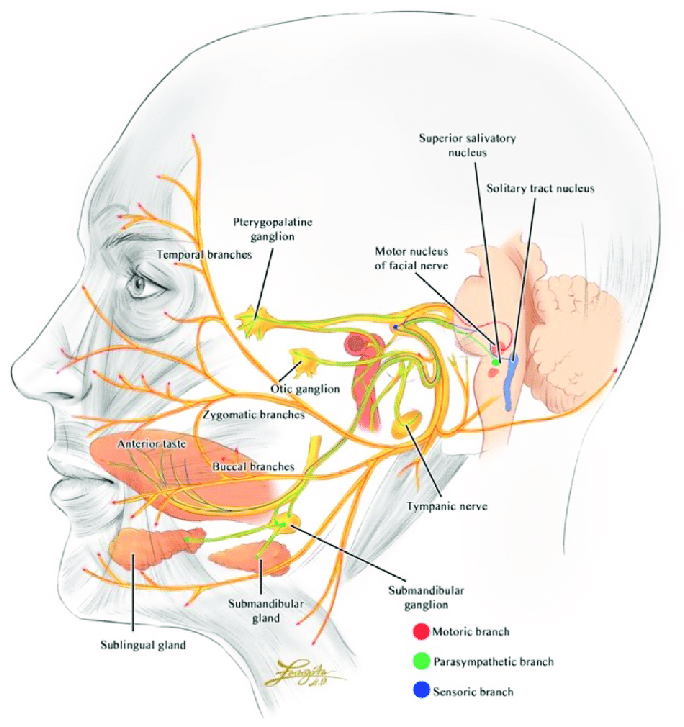
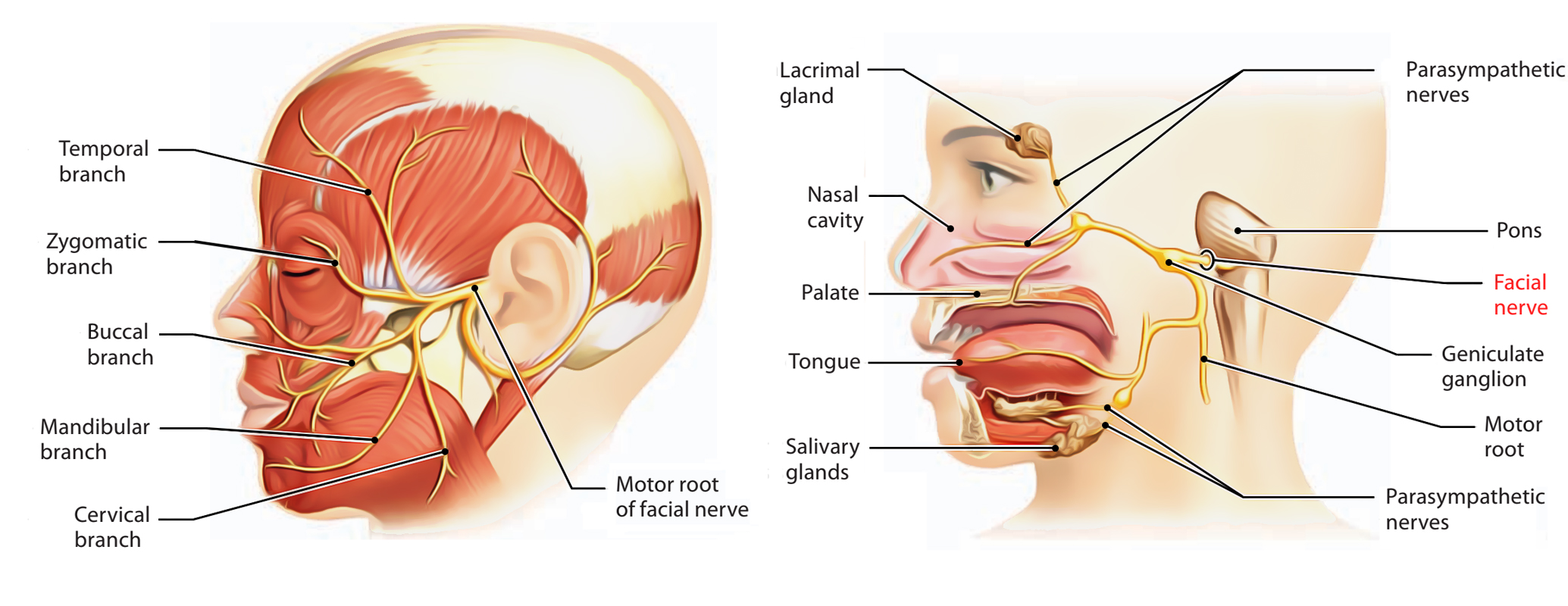
The facial nerve, also known as cranial nerve VII, is responsible for controlling the muscles of facial expression, transmitting taste sensations from part of the tongue, and supporting certain functions of the salivary and tear glands. Damage or inflammation of this nerve can lead to facial weakness or paralysis, which can significantly affect a person’s quality of life.
Common Causes of Facial Nerve Problems
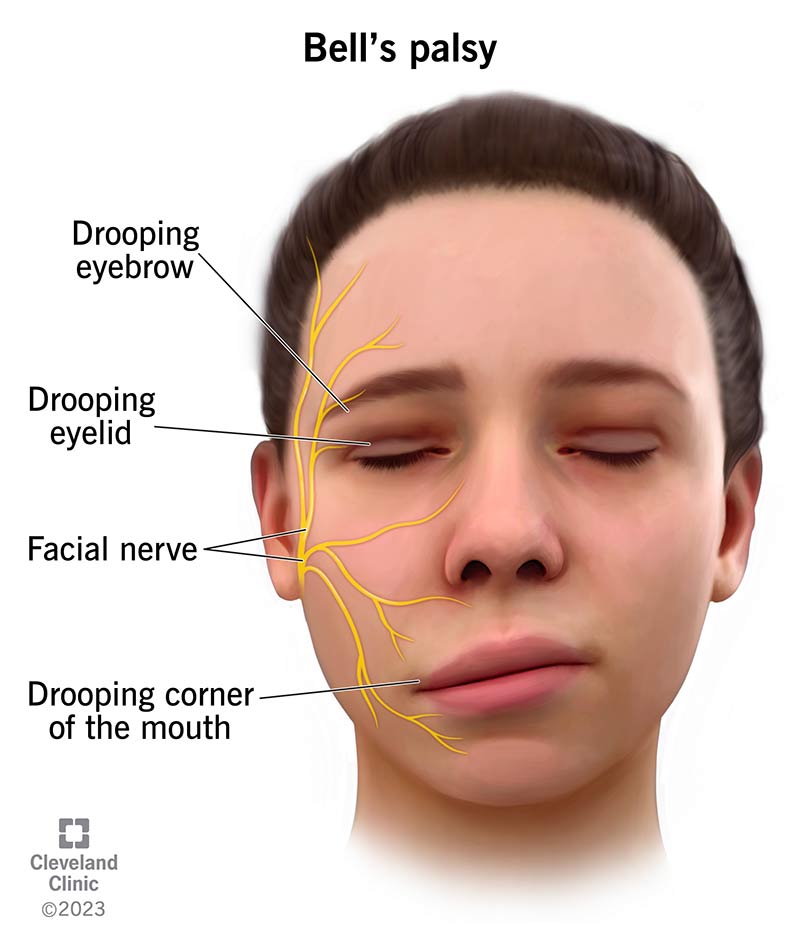
Bell’s Palsy: Sudden, temporary weakness or paralysis on one side of the face, often linked to viral infections.
Trauma: Head injuries or fractures that damage the nerve.
Tumors: Growths pressing on the nerve, such as acoustic neuroma.
Infections: Ear infections or herpes zoster virus affecting the nerve.
Neurological disorders: Conditions like multiple sclerosis.
Symptoms
Drooping of one side of the face.
Difficulty closing the eye on the affected side.
Altered taste sensation.
Drooling and difficulty speaking.
Increased sensitivity to sound in one ear.
Diagnosis
Diagnosis may involve:
Physical examination of facial movements.
Nerve conduction studies.
MRI or CT scans to detect structural causes
Treatment Options
Medications: Corticosteroids to reduce inflammation, antiviral drugs if a viral cause is suspected.
Physical therapy: Exercises to maintain muscle tone and improve coordination.
Eye protection: Using eye drops or protective glasses to prevent dryness.
Surgery: In rare cases, to repair nerve damage or remove tumors.
Recovery and Prognosis
Most cases of Bell’s Palsy recover within weeks to months, especially with early treatment. Chronic or severe nerve damage may require long-term rehabilitation.